Keyman Insurance Australia Business Loan Repayment Calculator
Estimate repayments with our Business Loan Calculator. Compare finance options, tailor loan terms, and plan with confidence for your business growth.
'Calculator results are estimates only and not quotes. Actual quotes will be provided by licensed brokers after you submit an enquiry.'
Business Loan Details:
Important!
Business Loan Interest Rates differ from lender to lender and will depend on your individual circumstances (credit history, employment status, age, etc.). To find out if you qualify ... and for a free, personalised interest rate and repayment quote, please CLICK HERE
Business Loan Amortisation Calculator
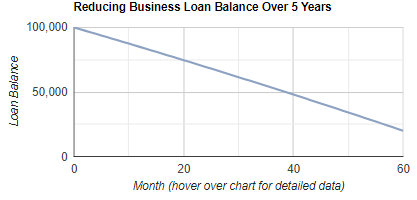
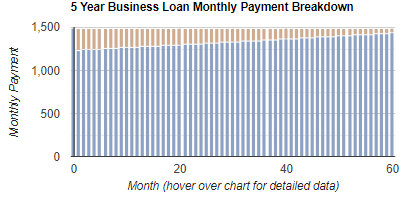
The following amortisation graphs detail month-by-month data on the progress of the proposed loan. The first chart below examines the reducing loan balance over the course of the finance contract term. The second graph illustrates the portion of each monthly repayment allocated to payment of interest vs principal reduction.
How to use our Business Loan Repayment Calculator
Our Business Loan Repayment Calculator helps you estimate business loan repayments, compare finance options and understand the true cost of borrowing before you commit. It is important because small changes to your loan amount, interest rate, term or balloon payment can materially change cash flow, total interest and end-of-term obligations. This calculator provides an indicative estimate only and is designed to support planning and budgeting for business growth.
How to complete each section for the best result:
1. Loan Amount
Enter the amount you expect to borrow as a whole number (no dots or commas). Include any costs you plan to capitalise into the loan, such as stamp duty, registration, insurance or other applicable fees, so the estimate reflects your real financed amount.
2. Balloon or Residual Payment (optional)
Select a residual as a percentage of the purchase price. A higher residual usually reduces ongoing repayments, but increases the amount due at the end and can increase total interest over the term. Choose a residual only if you have a realistic plan to refinance, pay it out, or sell an asset to meet the final amount.
3. Term of Loan
Select the number of years you want to repay the loan. A longer term generally lowers periodic repayments but increases total interest paid. A shorter term can reduce total cost but may place pressure on cash flow.
4. Interest Rate
Select an indicative annual interest rate to run a scenario. Your actual rate depends on lender assessment and your business circumstances, so consider testing multiple rates to stress-test affordability.
How to interpret the results:
1. Repayment estimate
Use the repayment figure as a budgeting guide for regular cash flow planning. If you selected a residual, remember the final payout is additional to the periodic repayments.
2. Amortisation charts
Review the reducing loan balance over time and the split between interest and principal. Early repayments typically include a higher interest component, with principal reduction accelerating later.
General information only, not personal financial advice. It does not consider your objectives, financial situation or needs. Consider the loan contract, fees, repayment frequency, and whether the repayments remain affordable under higher rates or lower revenue, and seek professional advice if required.
Recent industry reporting suggests Australia’s financial advice market may be moving from contraction towards a more stable phase, after several years of adviser exits, higher compliance costs and changing professional standards. For life insurance customers, that matters because access to quality guidance can directly affect how quickly and confidently people arrange suitable cover. - read more
Australia’s life insurance sector is again focused on conduct standards, with industry attention shifting from review recommendations to the practical work of updating the Life Insurance Code of Practice. For households, the discussion is about clearer communication, fairer claims handling and better support when people are vulnerable. - read more
Recent industry reporting has again put Australia’s life insurance protection gap in the spotlight, with the life insurance sector warning that too many households and businesses remain exposed if illness, injury or death removes a major income source. While much of the public discussion focuses on families, the same issue applies to companies that depend heavily on a founder, director, rainmaker or technical specialist. - read more
APRA's latest quarterly life insurance performance update has added another marker to the recovery story in Australia's life insurance sector. The overall message is more settled than the volatility seen in recent years, with insurers continuing to operate in a more disciplined pricing and capital environment. For business owners, however, a steadier market should not be read as a signal to put key person insurance on the shelf and forget about it. - read more
Keyman insurance, also known as key person insurance, is designed to help a business manage the financial impact of losing a person whose skills, leadership, relationships or knowledge are central to its operations. For Australian startups, small businesses and established companies, it can form part of a wider business continuity and risk management plan. - read more
Key person insurance, also known as key personnel insurance, key employee insurance or key man insurance, helps protect a business from financial loss if an essential team member dies, becomes incapacitated or is otherwise unable to continue in their role. For many Australian SMEs, this protection can form part of a broader business strategy by supporting continuity, funding transition costs and giving stakeholders greater confidence that the business has planned for disruption. - read more
Keyman insurance is a specialised type of coverage designed to protect businesses from the financial impact of losing critical personnel. This insurance focuses on individuals who play a pivotal role in the operational success of the company, such as founders, directors, or any team members whose absence could disrupt daily functions significantly. - read more
Knowledgebase
Insurance Deductible: the amount that an insured is required to contribute toward an insurance claim as stipulated in an insurance policy. Otherwise known as the "policy excess".